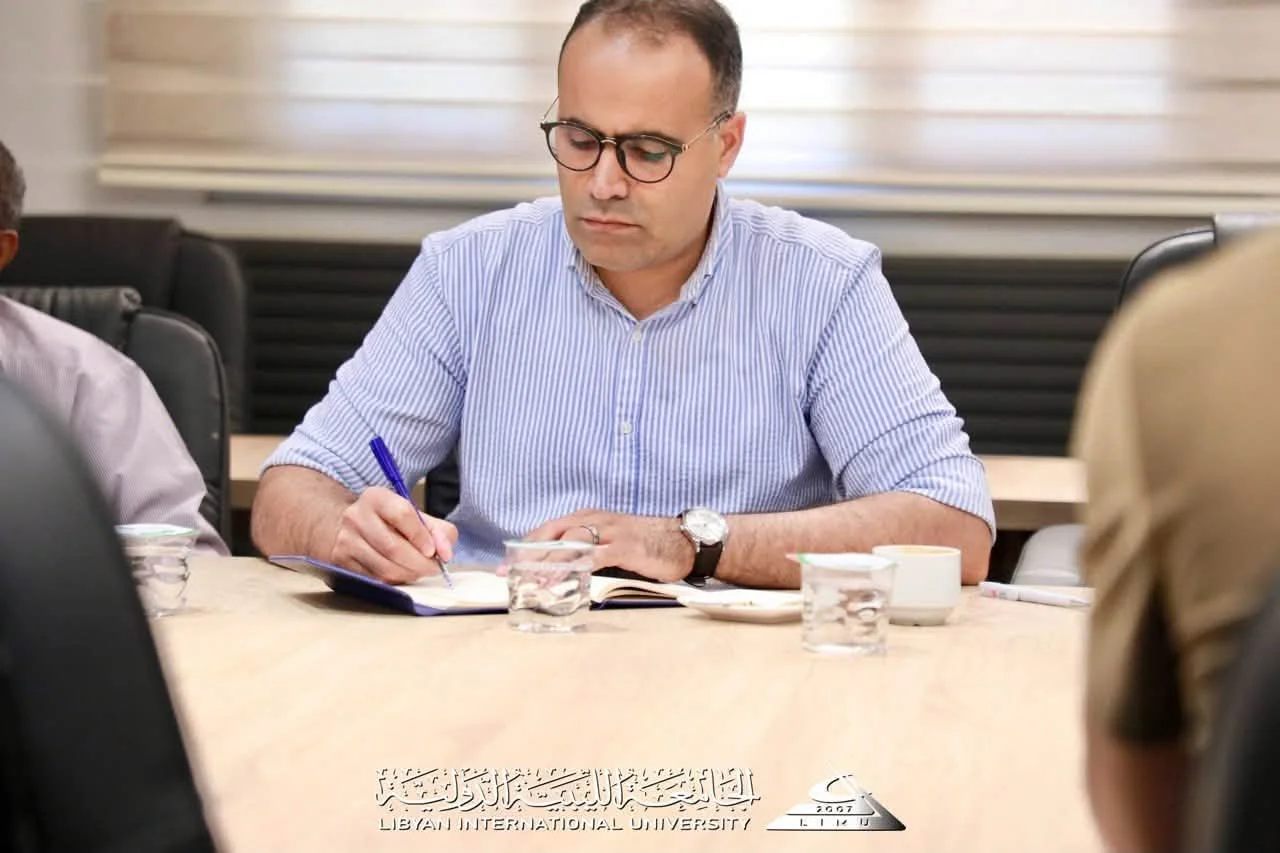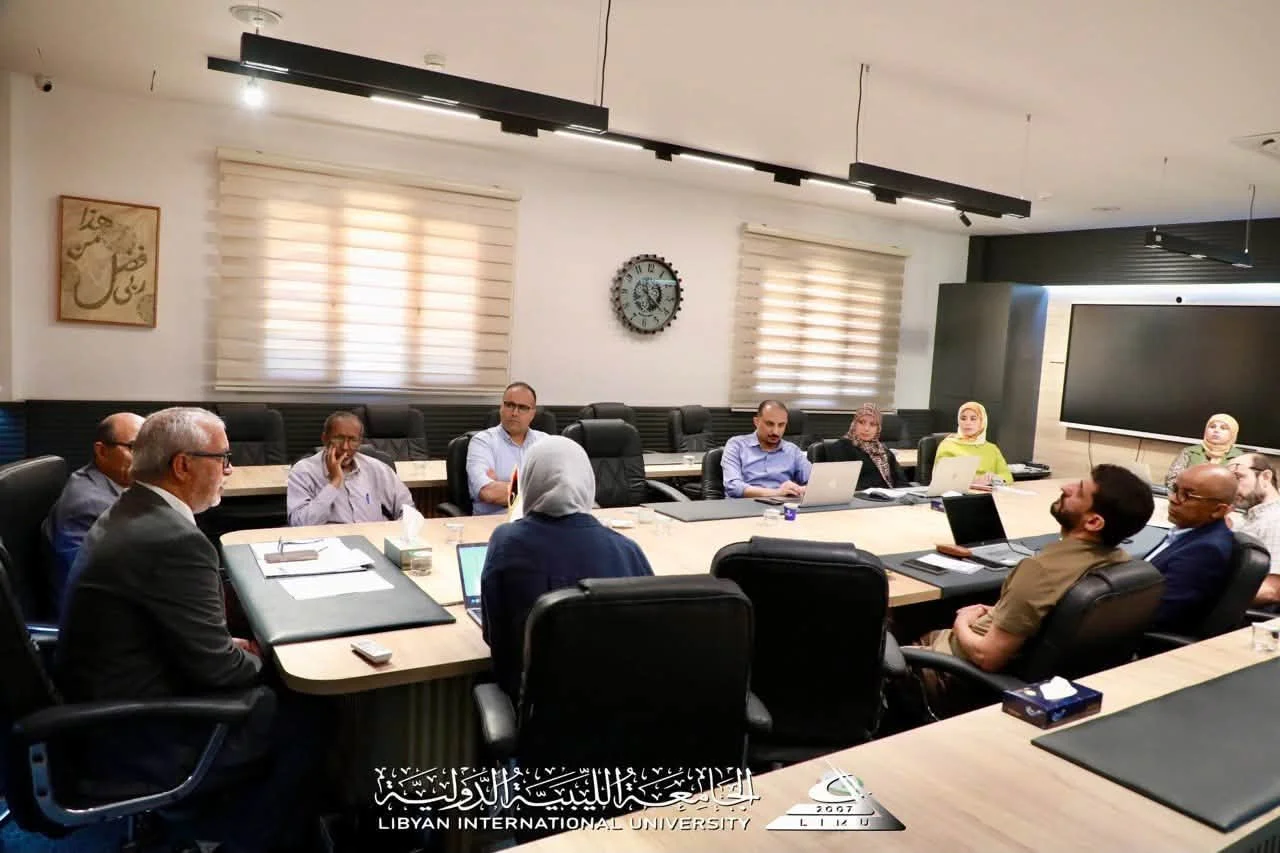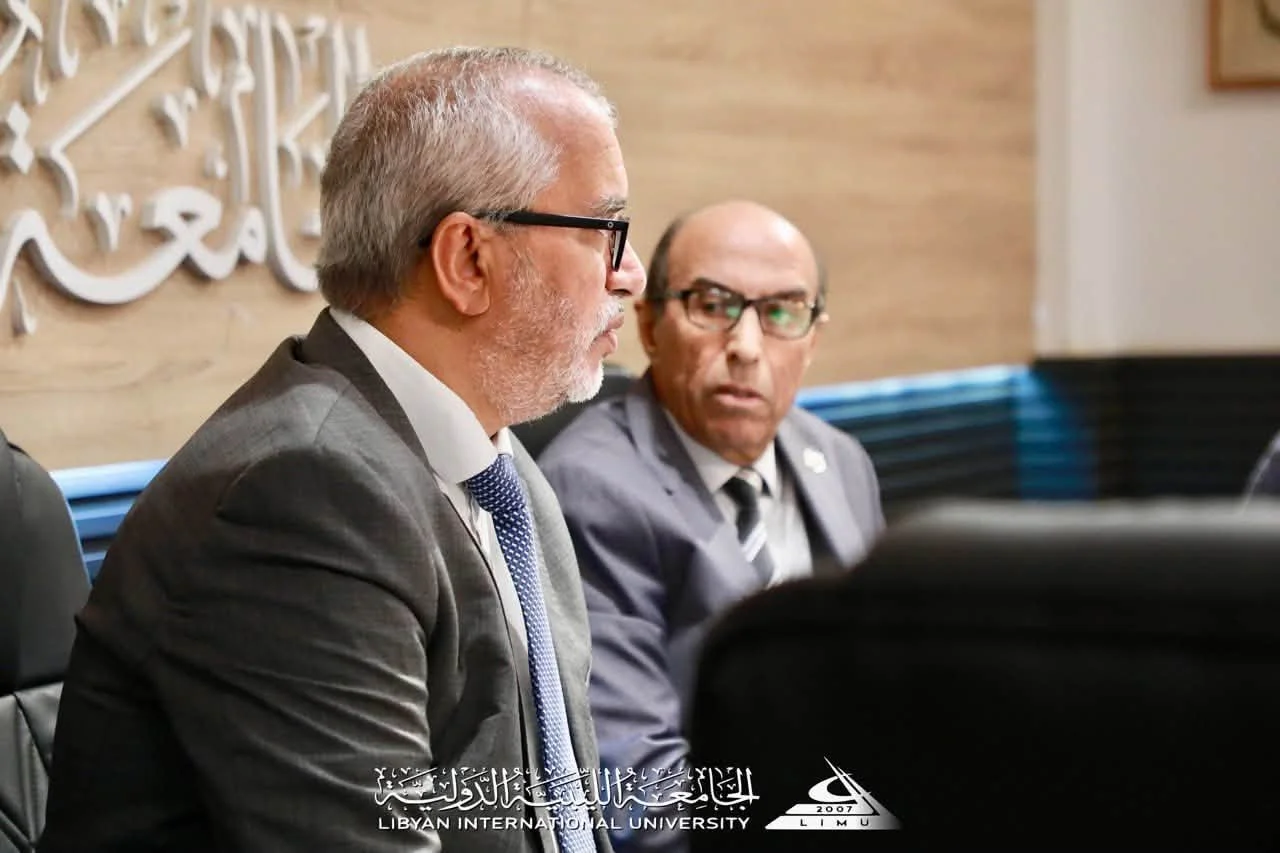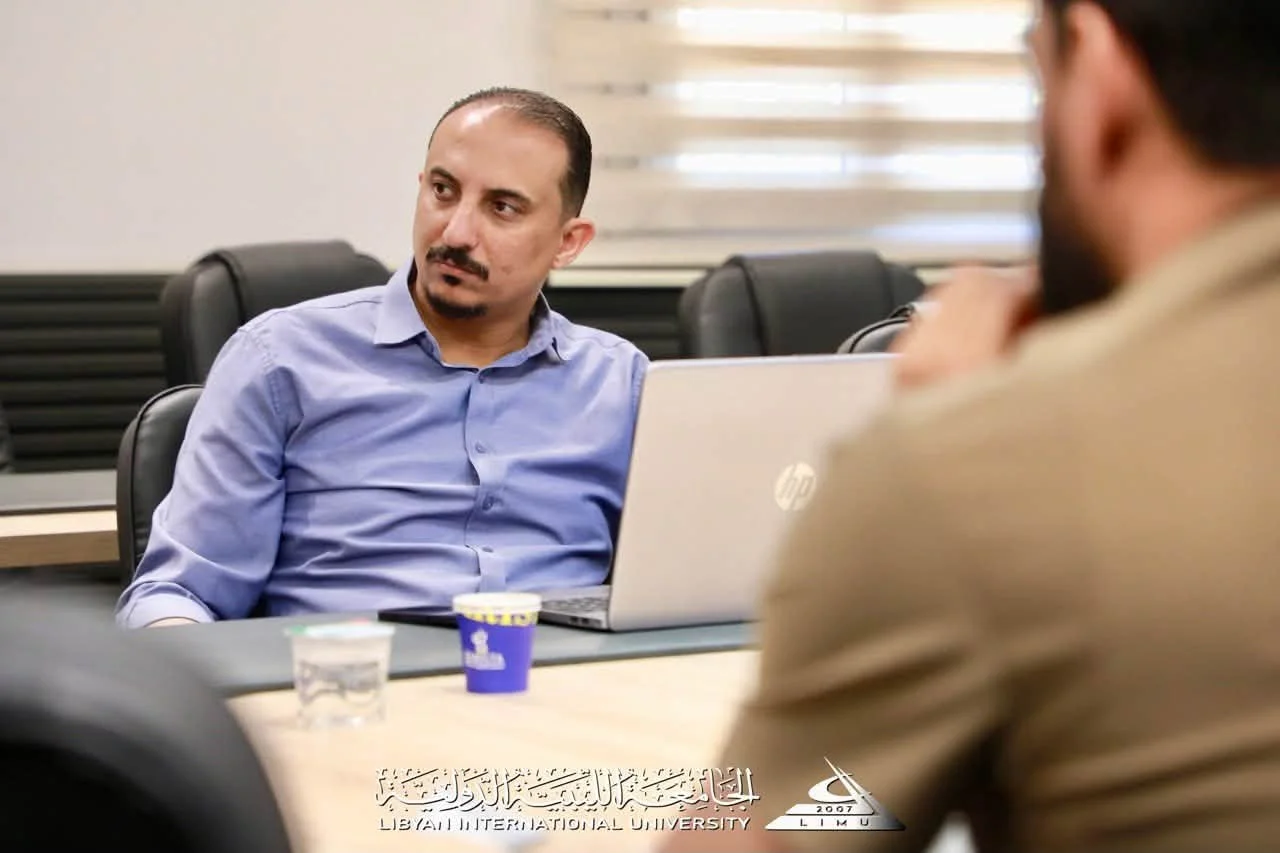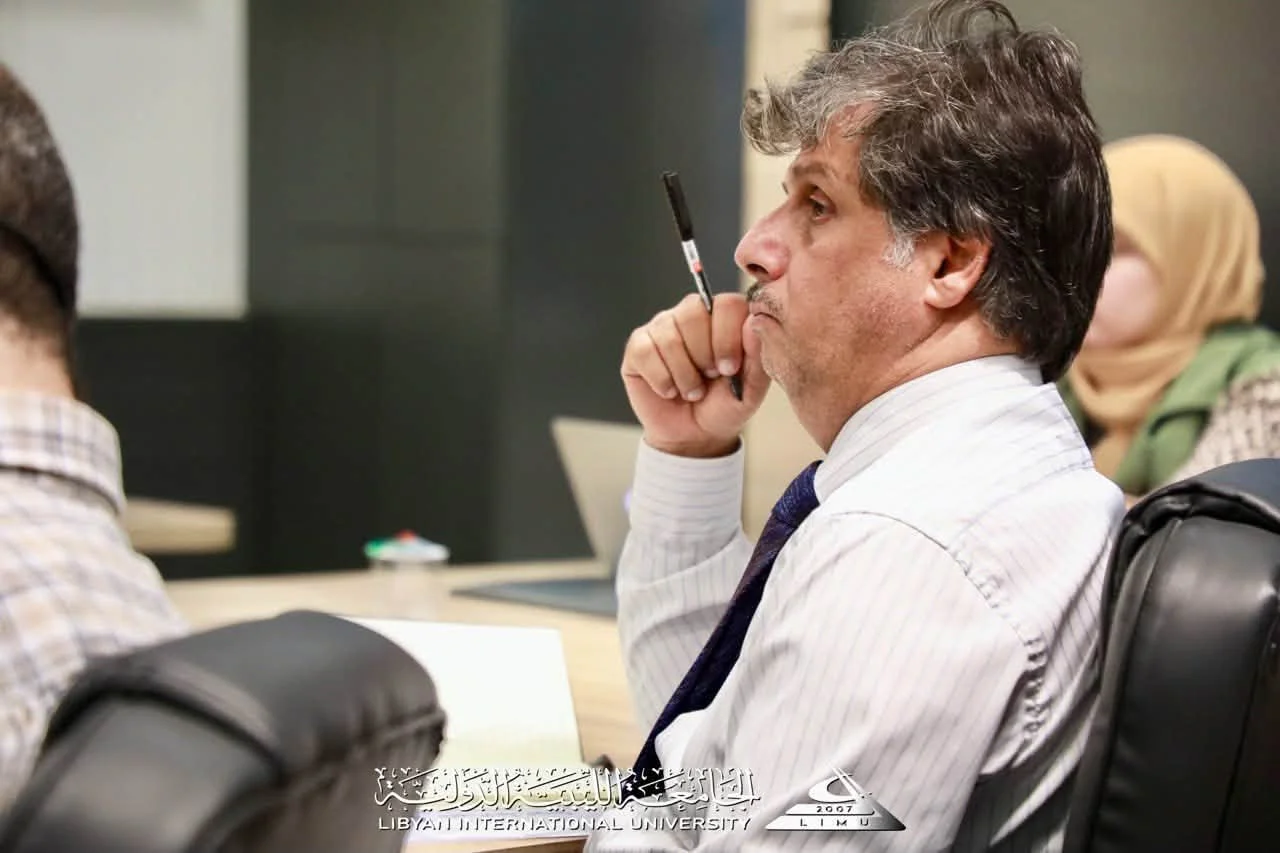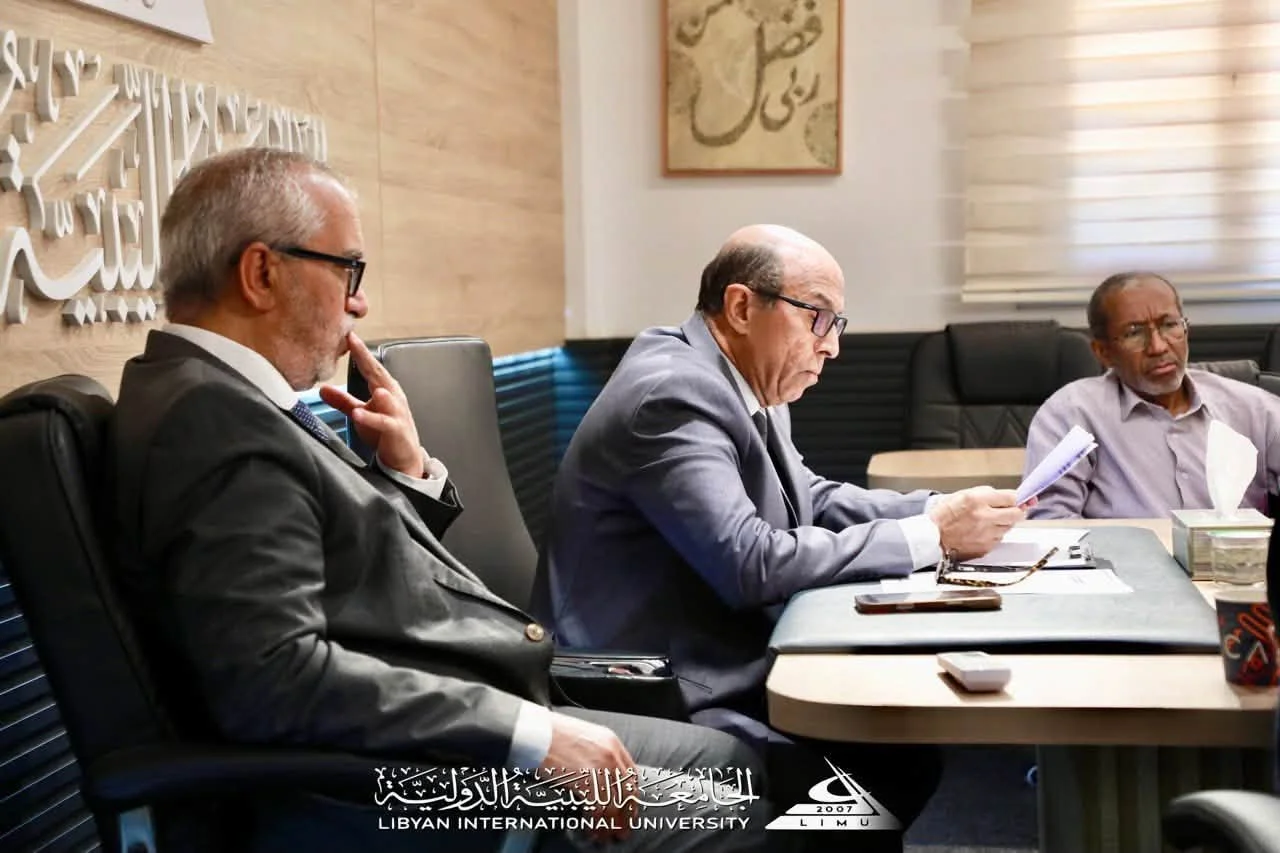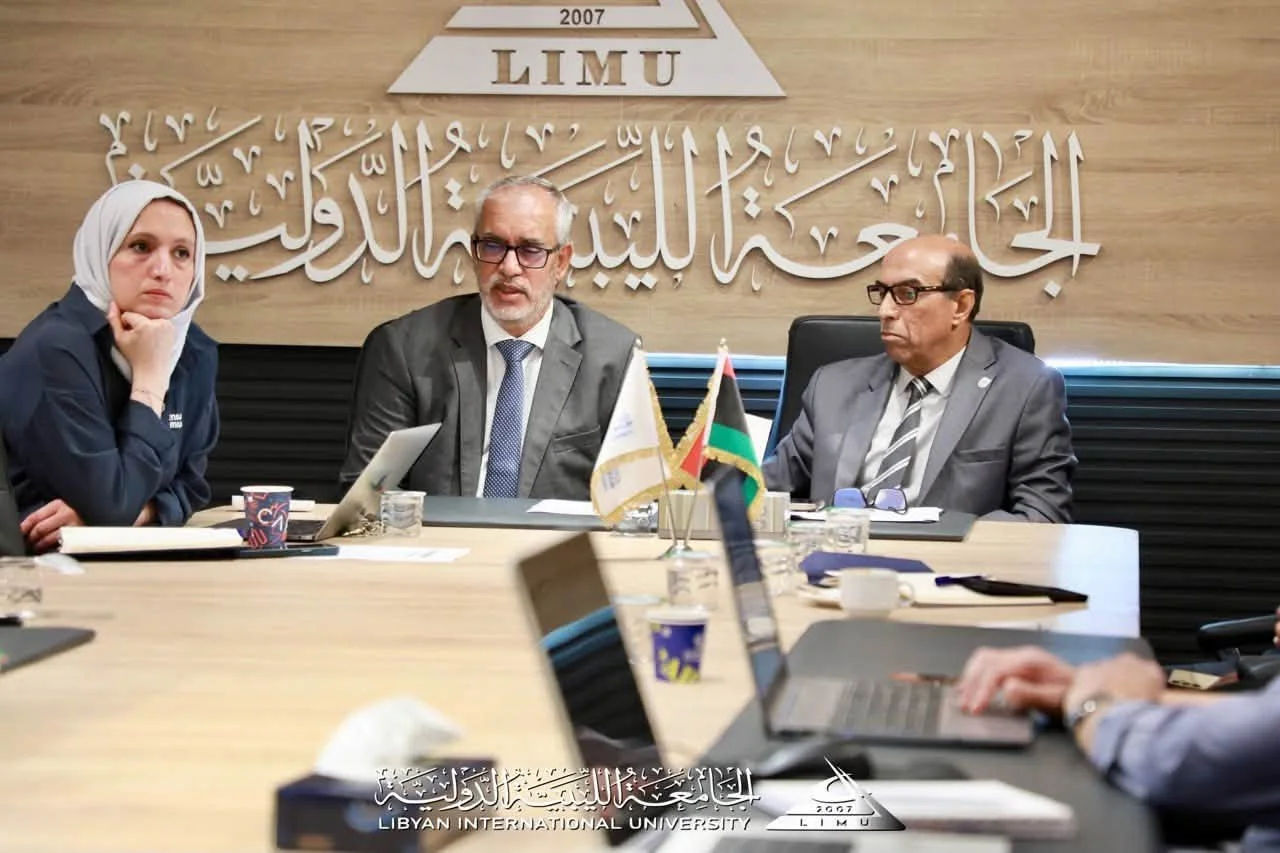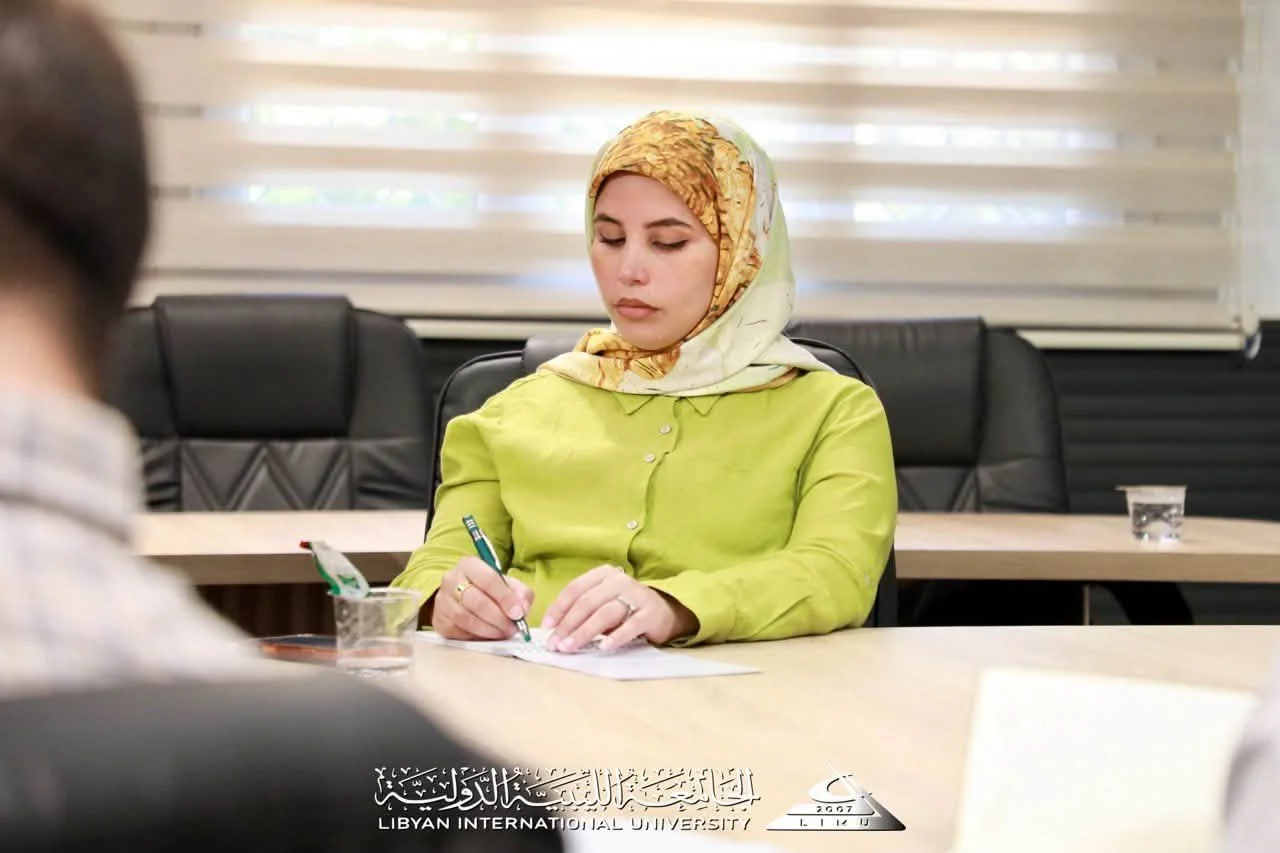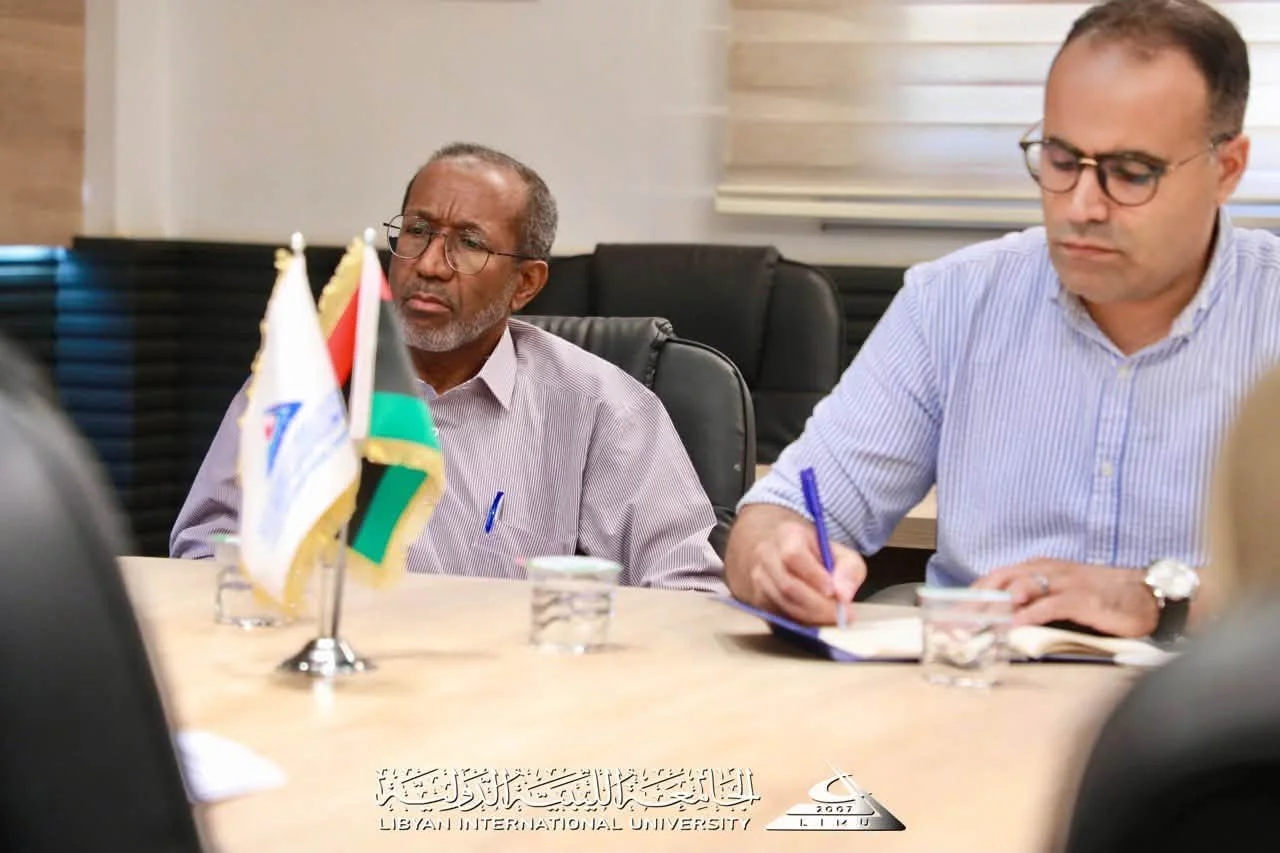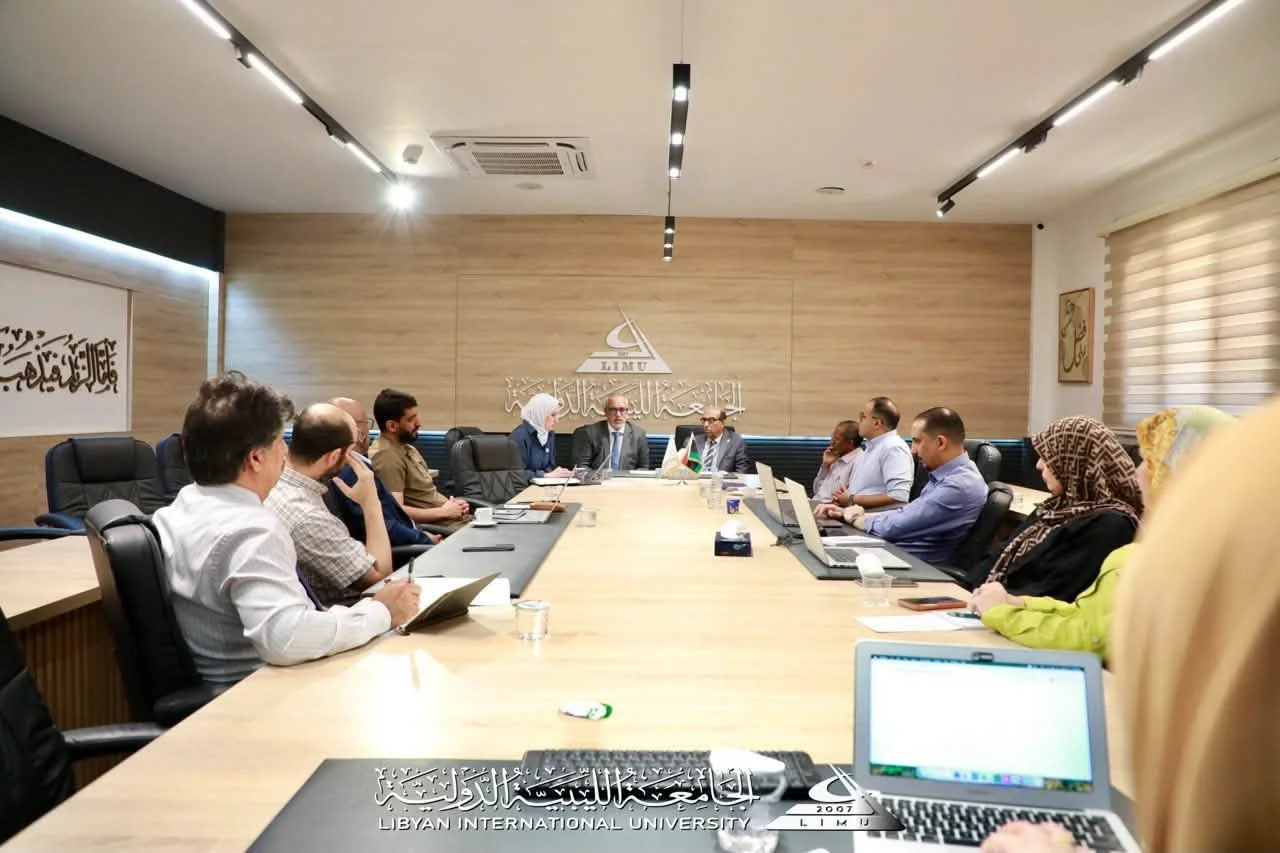
A Qualitative Shift in Student Assessment: LIMU Moves Beyond Traditional Examinations The National Unity Hall hosted, on the morning of Saturday, July 4, 2026, the first meeting of the Committee for Developing Assessment and Measurement Mechanisms in the Educational Process, chaired by Prof. Dr. Abdulla Elmansoury, Vice President for Learning Affairs, with a distinguished group of university faculty and specialists from diverse academic backgrounds serving as committee members. Prof. Dr. Mohamed Saad Mubarak, President of the University, attended part of the inaugural meeting and delivered an inspiring address, emphasizing the critical importance of the committee’s work. At the beginning of the meeting, Prof. Dr. Abdulla Elmansoury, Chair of the Committee, welcomed the University President and committee members to the committee’s first meeting. He highlighted that, in his view, this is one of the most important committees that can be established within any higher education institution, because it addresses one of the most influential components of the educational process. He expressed his expectation that the committee would serve as a valuable resource and provide significant support to the Agency for Learning Affairs in carrying out some of its most important and demanding responsibilities. He noted that the University has consistently placed strong emphasis on curriculum development, as well as on improving teaching methods. However, he emphasized that international educational experience has demonstrated that the most influential element in student learning is neither the curriculum alone nor teaching methods alone, but rather assessment. Referring to the well-known educational principle: “Assessment drives learning.” He explained that students tend to learn according to what they are assessed on: If examinations assess memorization, students will focus on memorization. If they assess understanding, students will strive for understanding. If they assess critical thinking, problem-solving, and creativity, students’ learning will naturally shift toward developing these skills. He clarified that developing assessment is not merely about improving examinations; it is a means of reshaping and redirecting the educational process as a whole. He further pointed out that higher education has now entered a fundamentally different era from previous decades, characterized by: Artificial Intelligence Digital Learning Blended Learning Personalized Learning Open Educational Resources Large AI models such as ChatGPT and others Students can now access vast amounts of information within seconds. Therefore, he stressed that it is no longer reasonable to continue assessing students using methods that were appropriate in the past. Prof. Elmansoury then raised a number of key questions that should remain at the forefront of the committee members’ discussions. He concluded that the committee’s task is not simply to develop a question bank or review examination regulations. Rather, its responsibility is to build a comprehensive assessment system. He outlined the foundations of this system, emphasizing that the institutional development initiative aims to gradually and systematically enhance the assessment methods currently in use, preserving their strengths, addressing areas of weakness, and introducing appropriate innovations based on scientific evidence and international best practices. He expressed his hope that the committee would work in a spirit of teamwork, emphasizing his belief that every member brings valuable expertise that can make a genuine contribution to this important project. He concluded by expressing his wish that the committee’s discussions would be based on academic and scientific dialogue, respect for diverse perspectives, and reliance on evidence.